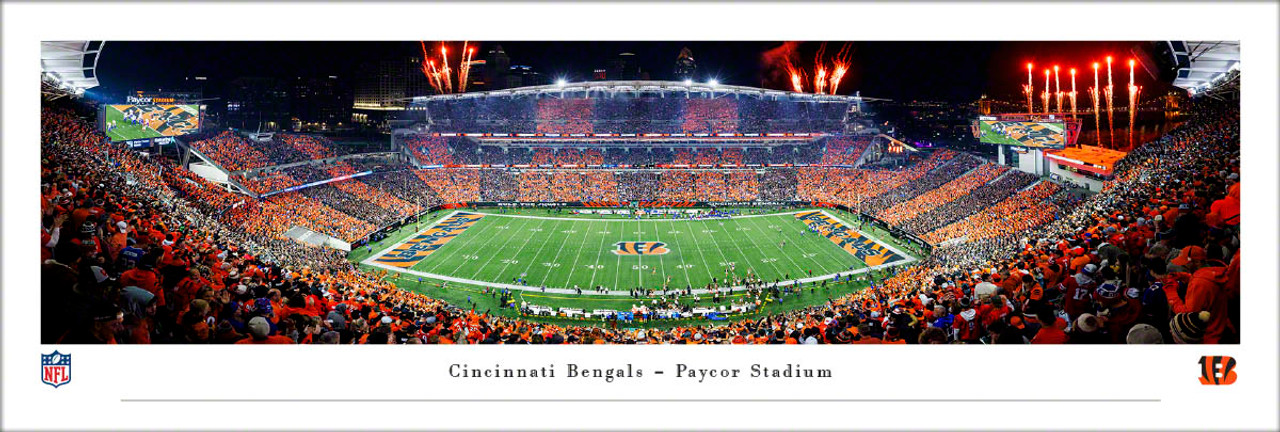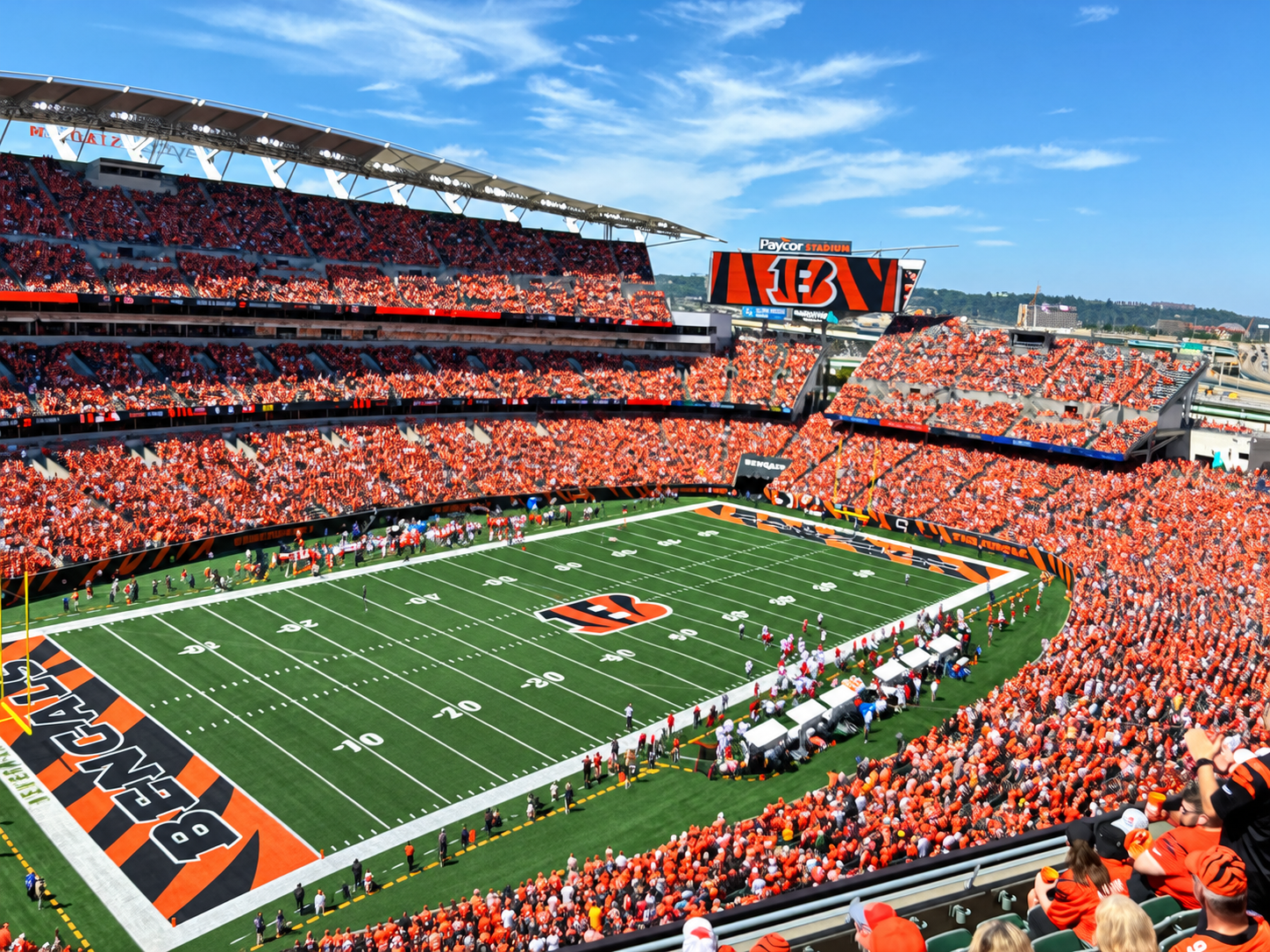
“Welcome to the Jungle” isn’t just a song—it’s the game-day atmosphere at Paycor Stadium, home of the Cincinnati Bengals. Set along the banks of the Ohio River in downtown Cincinnati, the stadium anchors the city’s revitalized riverfront district, which also includes Great American Ball Park, home of the Cincinnati Reds.
During the 1990s, both the Bengals and Reds sought to replace Riverfront Stadium, an aging multipurpose venue. Bengals owner Mike Brown argued that the stadium had become obsolete, particularly due to its lack of modern amenities such as luxury suites. As momentum for a new facility stalled, speculation grew that the franchise could relocate to cities including Baltimore, Cleveland, Los Angeles, or Lexington, KY. That uncertainty ended in 1996, when Hamilton County voters approved a referendum to fund construction of a new stadium.
| MEMORABLE MOMENTS IN BENGALS HISTORY |
|
Built just blocks from Riverfront Stadium, construction began on April 25, 1998. In a departure from league trends, the Bengals initially chose not to sell naming rights, instead honoring founder Paul Brown by naming the venue Paul Brown Stadium. In August 2022, however, the team entered into a 16-year naming rights agreement with Paycor, giving the stadium its current name, Paycor Stadium.
The Bengals played their first game at the stadium on September 10, 2000. Designed with a sleek, modern aesthetic, Paycor Stadium seats more than 65,000 fans. The lower bowl fully surrounds the field, while club and upper seating levels extend along both sidelines, with additional seating in the north end zone. Video boards are positioned above both end zones to provide clear views of game action and replays.
Amenities include 137 luxury suites, more than 7,000 club seats, multiple premium dining areas, and a team store. The stadium also offers scenic views of the Cincinnati skyline and the Ohio River. Following persistent issues with the natural grass surface, the Bengals installed FieldTurf after the 2003 season. Additional enhancements over the years have included upgraded concessions, new social spaces such as an east end zone bar, and an expanded video board—approximately 40% larger than the original—ensuring an improved fan experience.
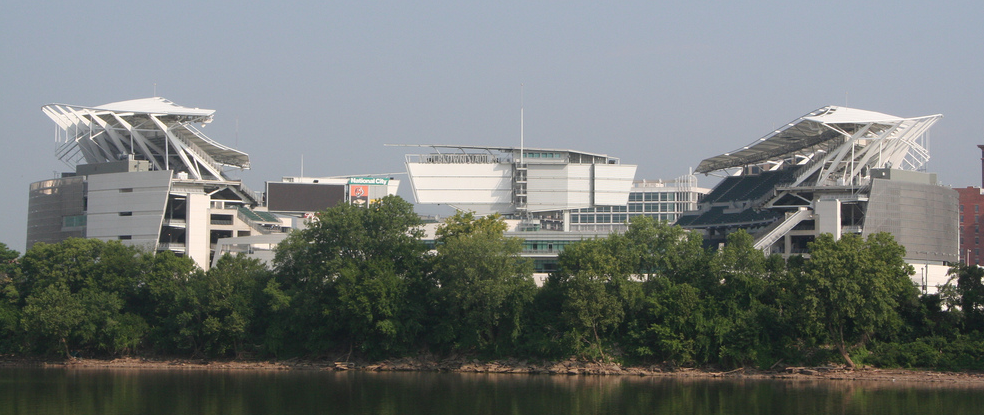
Outside Paycor Stadium