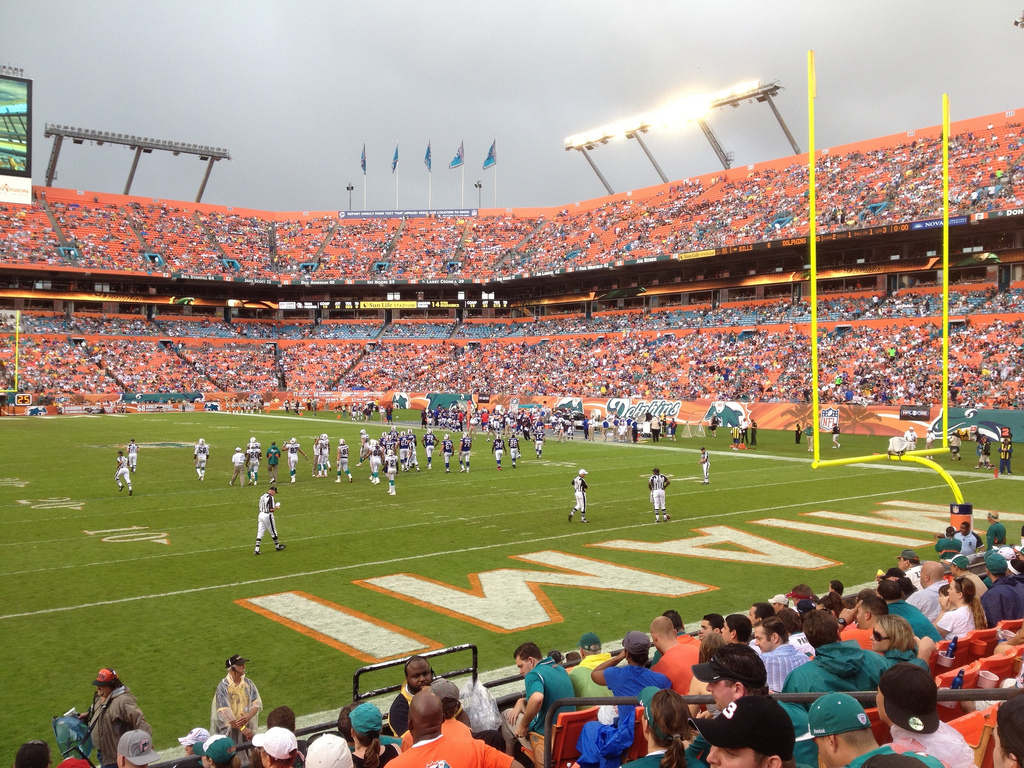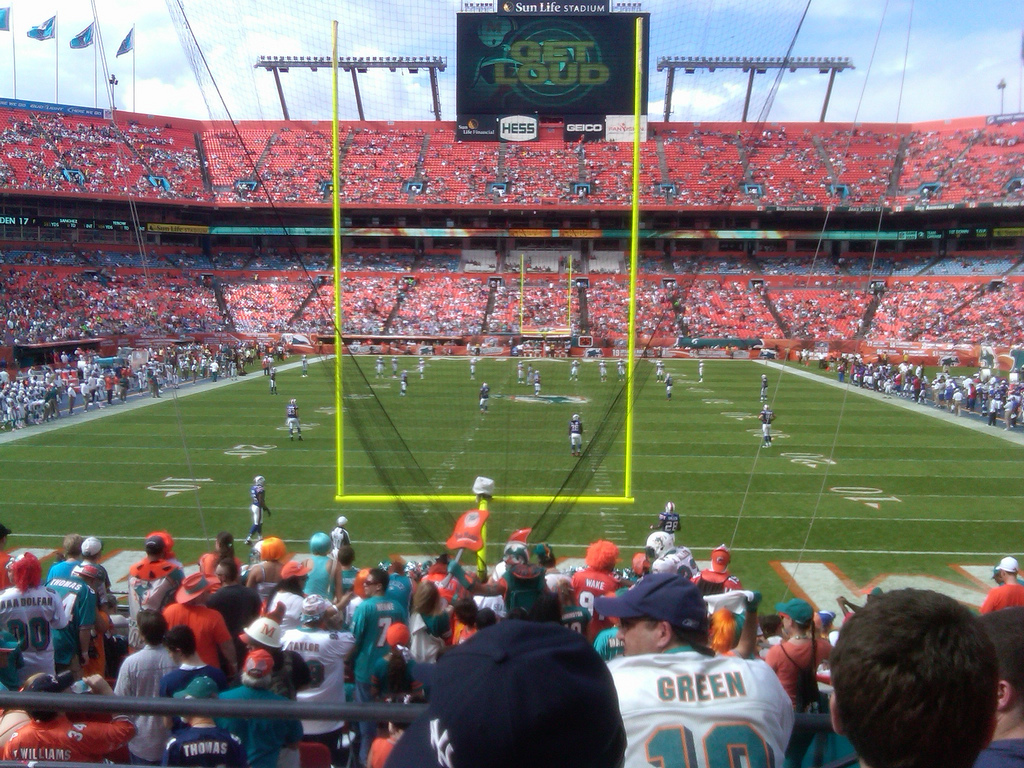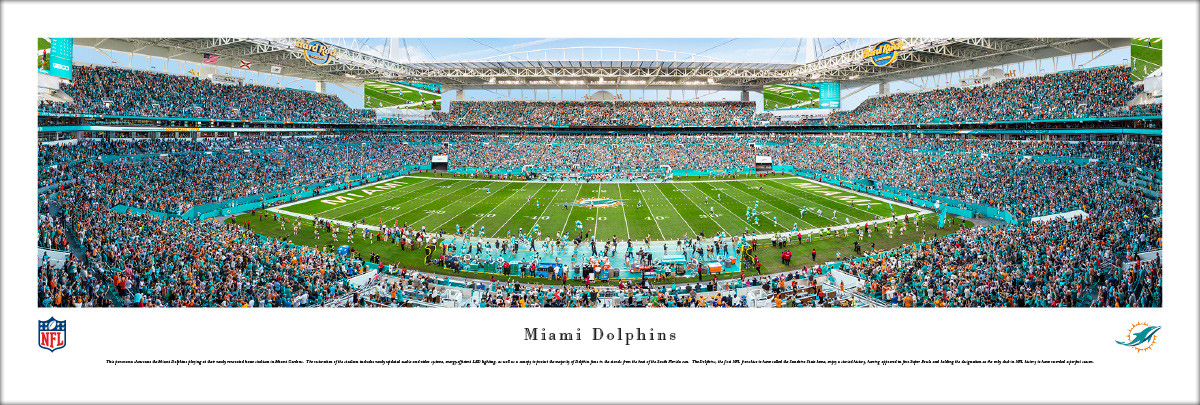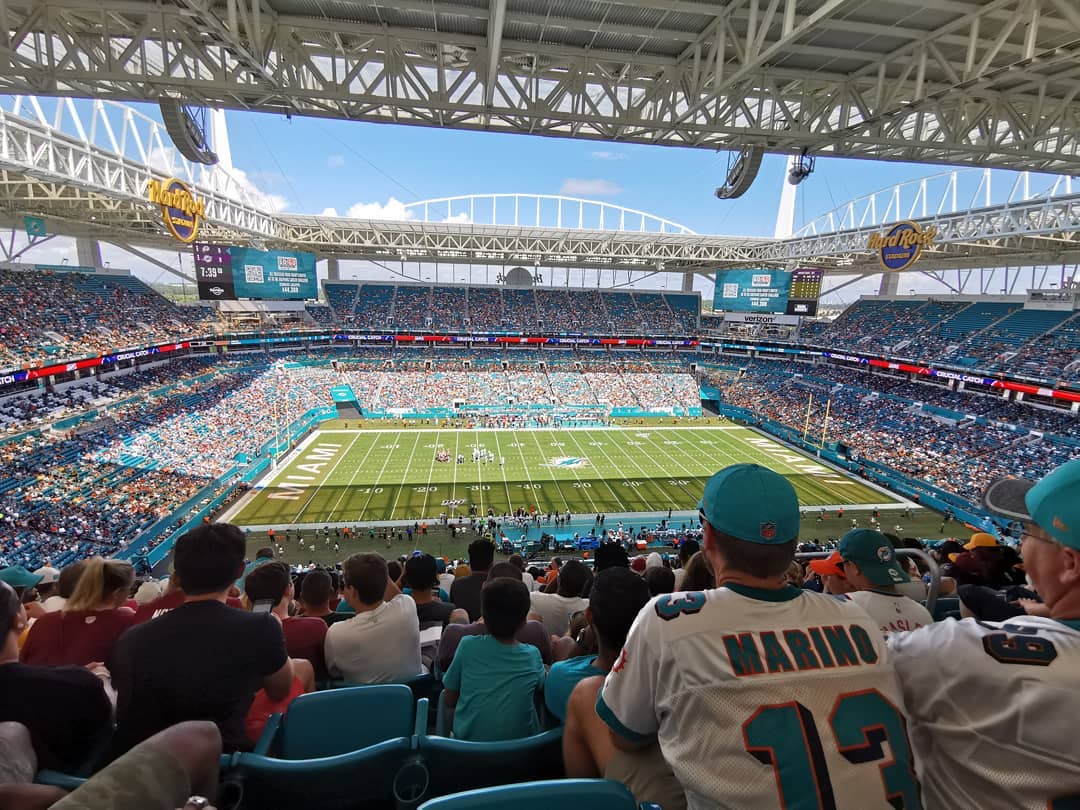
For decades, football has been an integral part of the sports landscape in Miami. The city is home to the Miami Dolphins of the NFL and the Miami Hurricanes football program, and it has hosted numerous major events including multiple Super Bowl games and NCAA football championship games. The stadium now known as Hard Rock Stadium has been the site of many of these memorable moments and has served as the home of the Dolphins since 1987. Over the years, the venue has undergone several name changes and, following a massive renovation completed prior to the 2016 season, now looks dramatically different from its original design.
The history of the Dolphins dates back to 1966 when the team joined the American Football League as an expansion franchise under the ownership of Joe Robbie. The team played its home games at the Orange Bowl, a 72,000-seat stadium it shared with the Miami Hurricanes. After nearly two decades at the Orange Bowl, Robbie began advocating for a new stadium in the late 1970s and early 1980s. When voters repeatedly rejected tax increases to fund a new facility, Robbie decided to finance the project himself. Construction was funded through the sale of luxury suites and club seats, private investment, and long-term agreements with season ticket holders. Work on the new stadium began in December 1985 and was completed in less than two years.
| MEMORABLE MOMENTS IN DOLPHINS HISTORY |
|
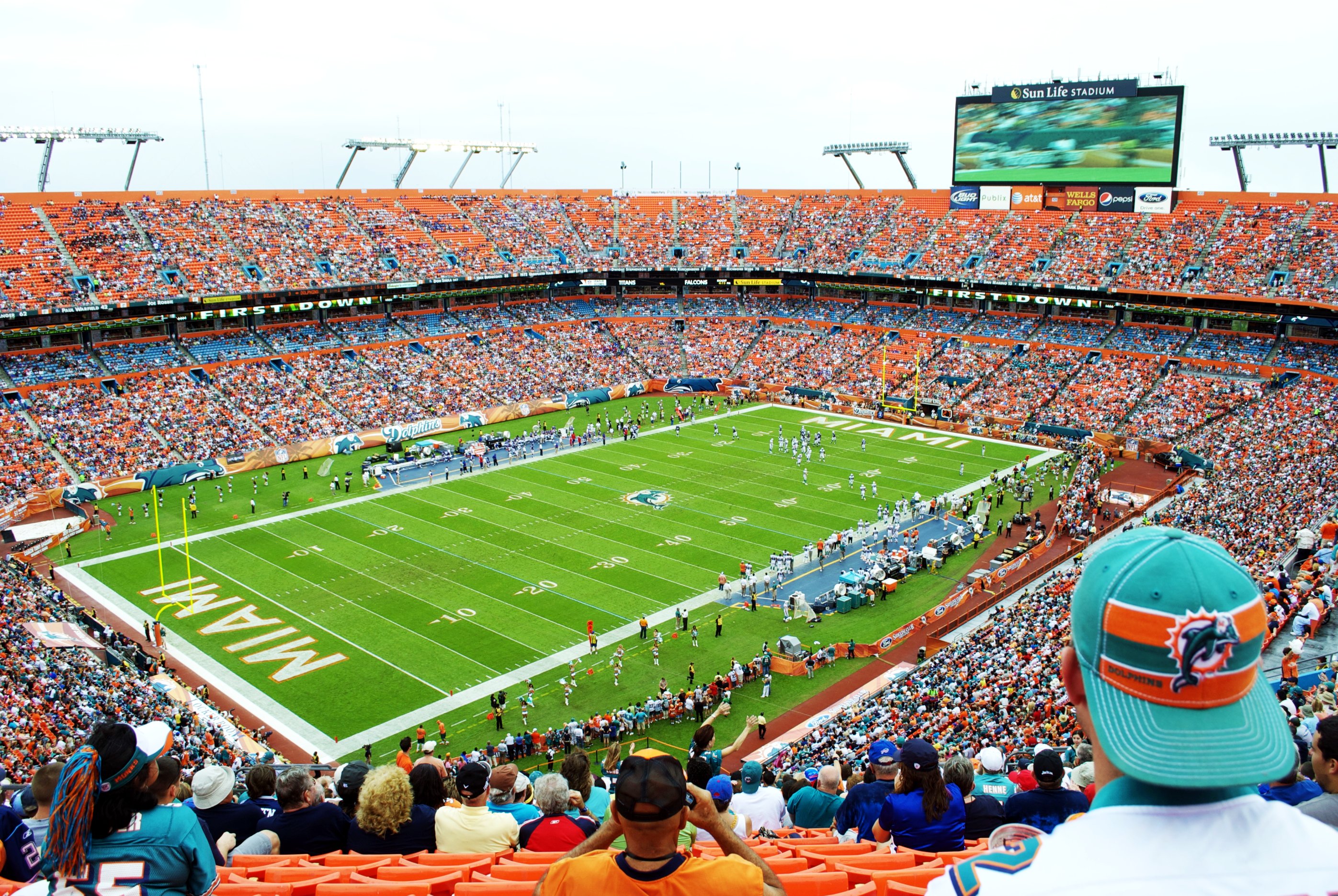
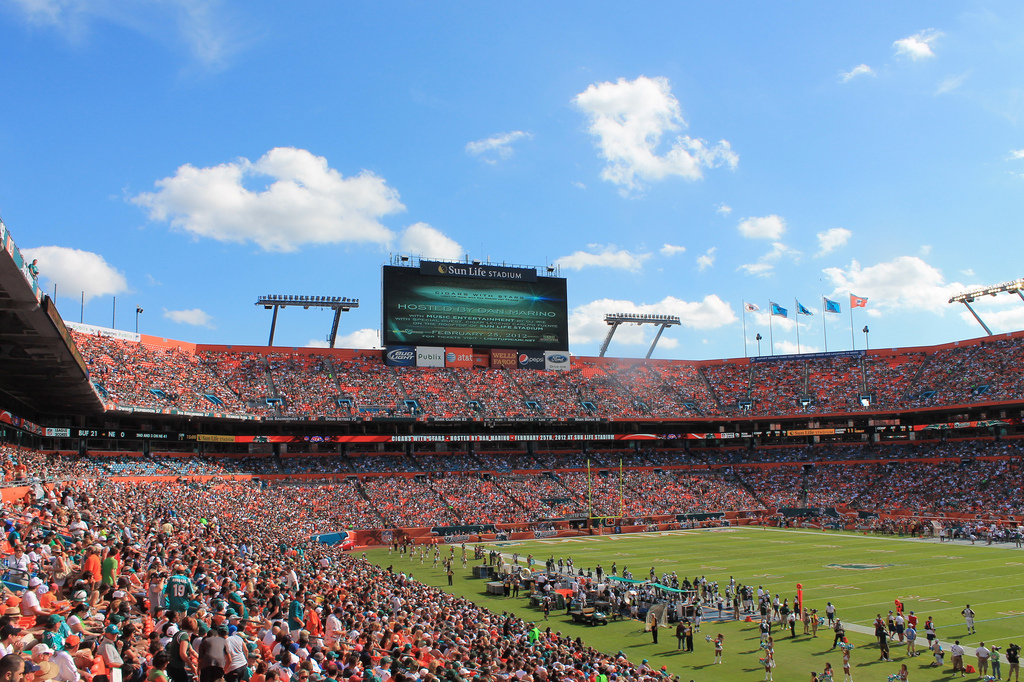
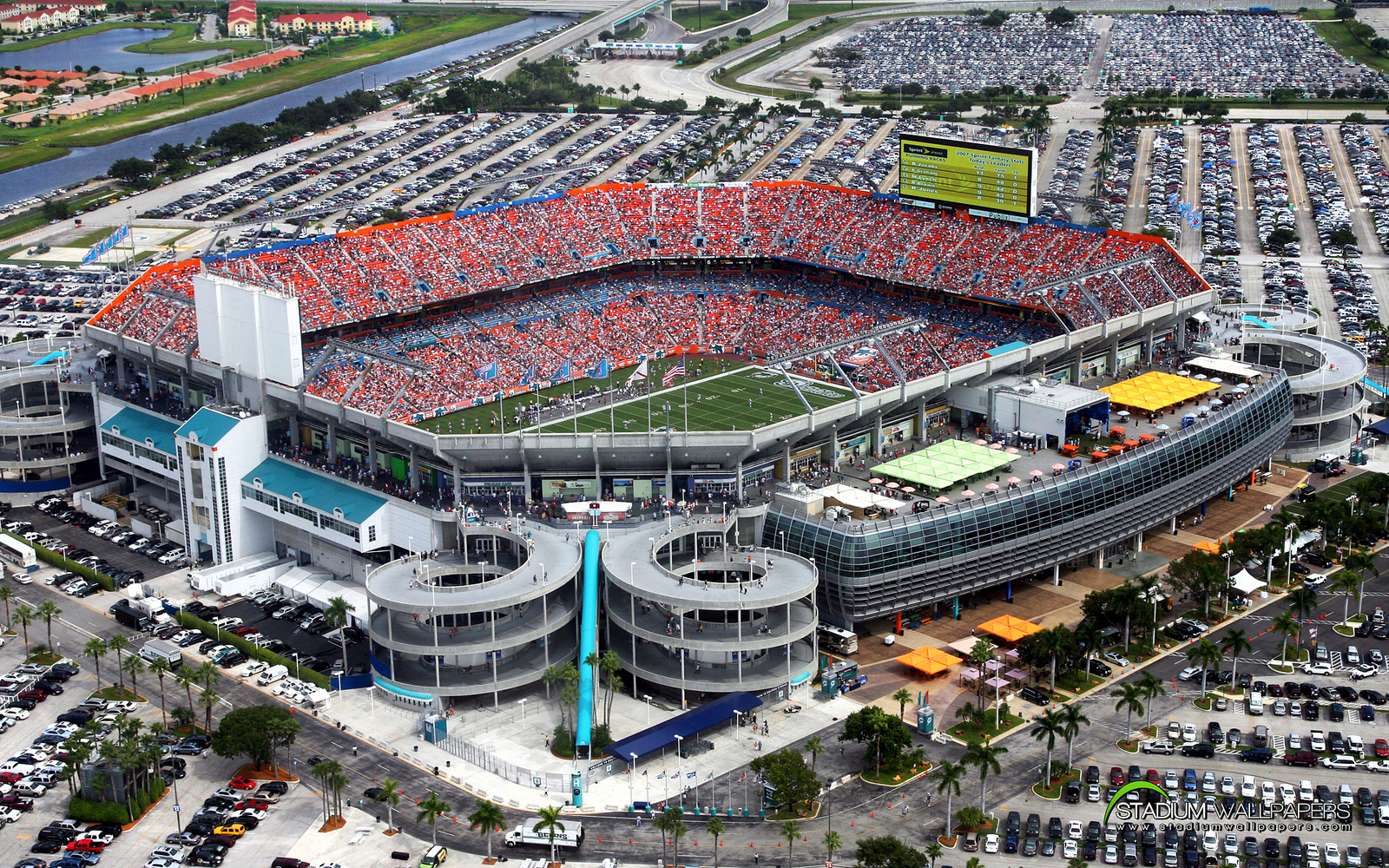
Originally named Joe Robbie Stadium, the Dolphins played their first game at the venue on August 16, 1987. The stadium represented a major upgrade over the Orange Bowl and featured 75,000 orange and teal seats arranged around the field. Numerous circular ramps and escalators made accessing seats easier for fans, while two video scoreboards were positioned above the rim of the upper deck at each end zone.
In 1990, in an effort to bring Major League Baseball to Florida, Wayne Huizenga purchased 50 percent of Joe Robbie Stadium. The following year, Major League Baseball awarded Miami an expansion team, the Florida Marlins, who began play in 1993. Anticipating the possibility of baseball arriving in Miami, Robbie had originally insisted that the stadium be built with a wider rectangular layout than typical football venues. This design allowed the facility to accommodate baseball, and the lower-level seats along the north side of the stadium were retractable so the field could be reconfigured. The Marlins played at the stadium for 21 seasons before moving into their own ballpark, Marlins Park, in 2012.
Although parts of the stadium had been renovated over the years, the departure of the Marlins made it clear that a more extensive overhaul was necessary to keep the facility competitive with newer NFL stadiums and to remain a viable host for future Super Bowls. In January 2013, Dolphins owner Stephen M. Ross unveiled plans for a dramatic transformation of the stadium. The $500 million renovation, financed entirely by the team, was completed in two phases beginning after the 2014 season.
The first phase included rebuilding the lower seating bowl, bringing the stands 24 feet closer to the field and removing seating sections in the four corners of the upper deck. This reduced the stadium’s seating capacity to 65,326. All of the original orange and teal seats were also replaced with new aqua-colored seats. The second phase began after the 2015 season and significantly altered the stadium’s exterior and overall appearance. A large open-air canopy supported by four towering corner spires was constructed above the seating bowl, providing shade for approximately 90 percent of fans while still maintaining an open-air environment. In addition, four high-definition videoboards were installed in the corners of the upper deck to enhance the fan experience. The project was completed prior to the start of the 2016 NFL season and transformed the venue into one of the premier stadiums in professional football.
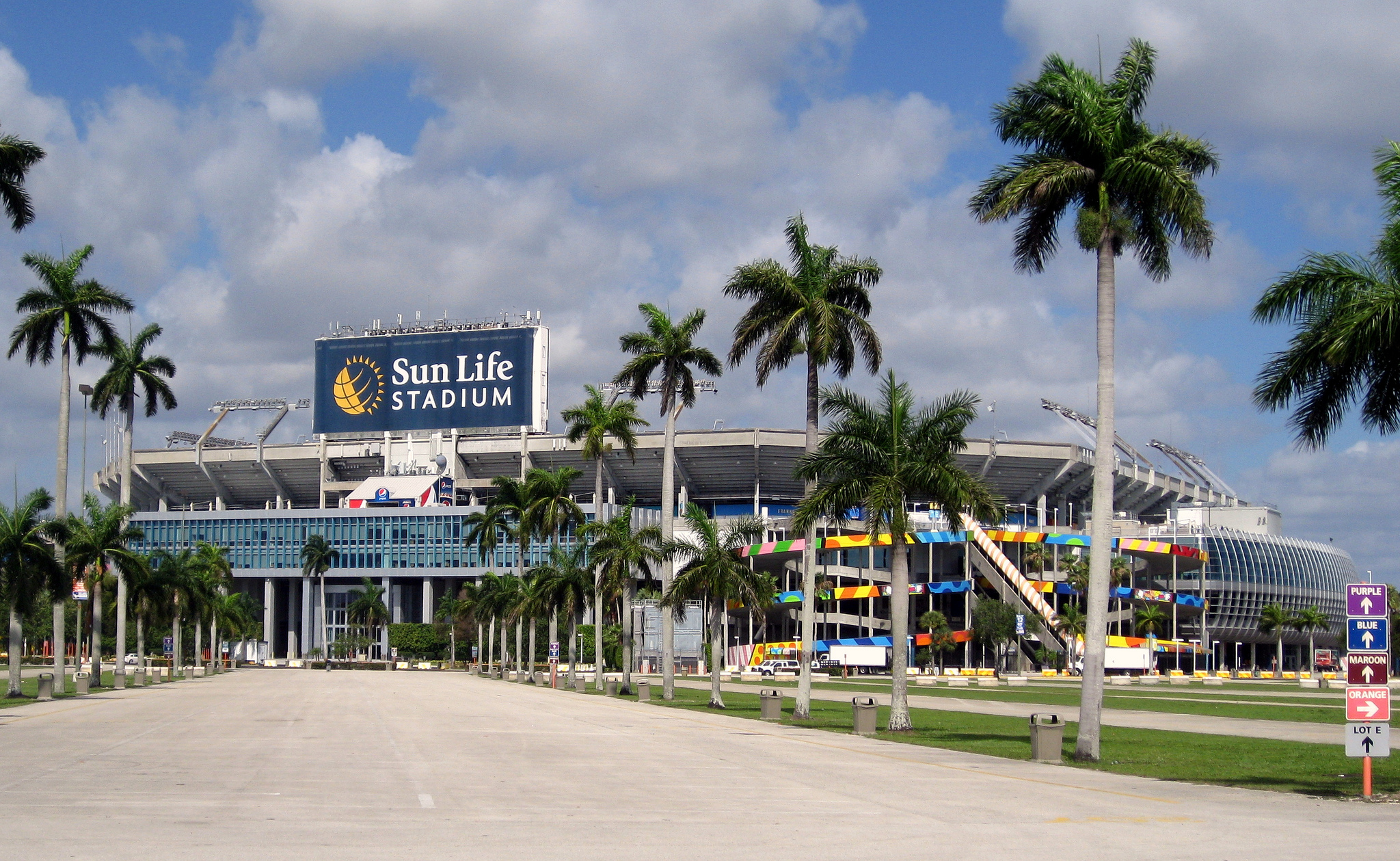
Since opening in 1987, the Dolphins’ home stadium has undergone several name changes, including Joe Robbie Stadium, Pro Player Stadium, and Sun Life Stadium. In August 2016, the team sold the naming rights to Hard Rock Cafe in an 18-year, $250 million agreement, and the venue became known as Hard Rock Stadium.
The stadium has hosted numerous major sporting events. It was the site of the World Series in 1997 and 2003 and has hosted six Super Bowls: Super Bowl XXIII (1989), Super Bowl XXIX (1995), Super Bowl XXXIII (1999), Super Bowl XLI (2007), Super Bowl XLIV (2010), and Super Bowl LIV (2020). The stadium also annually hosts the Orange Bowl college football game.
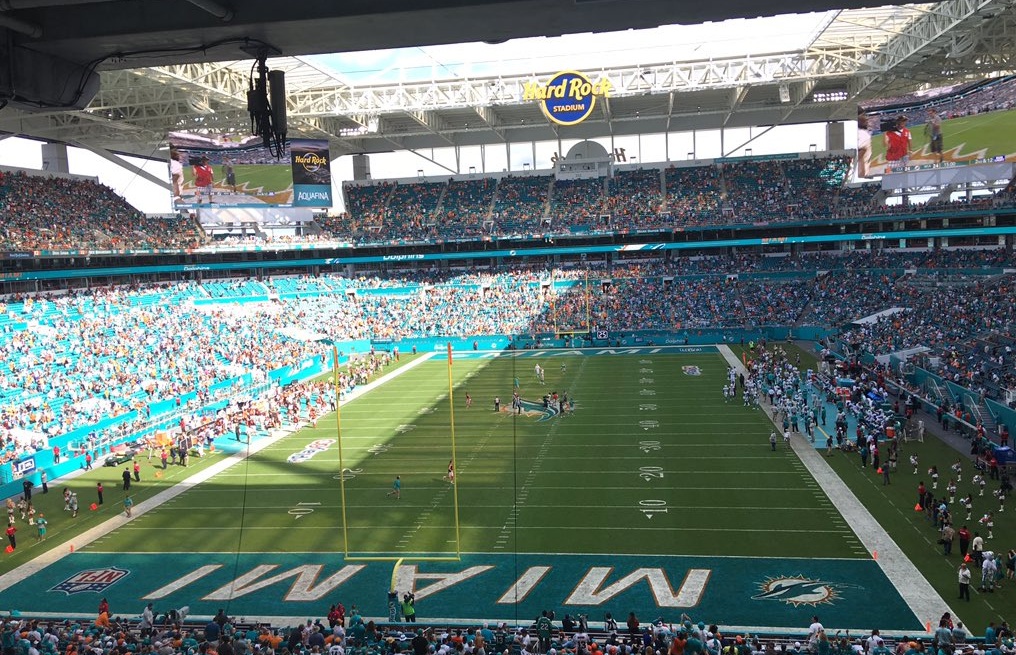
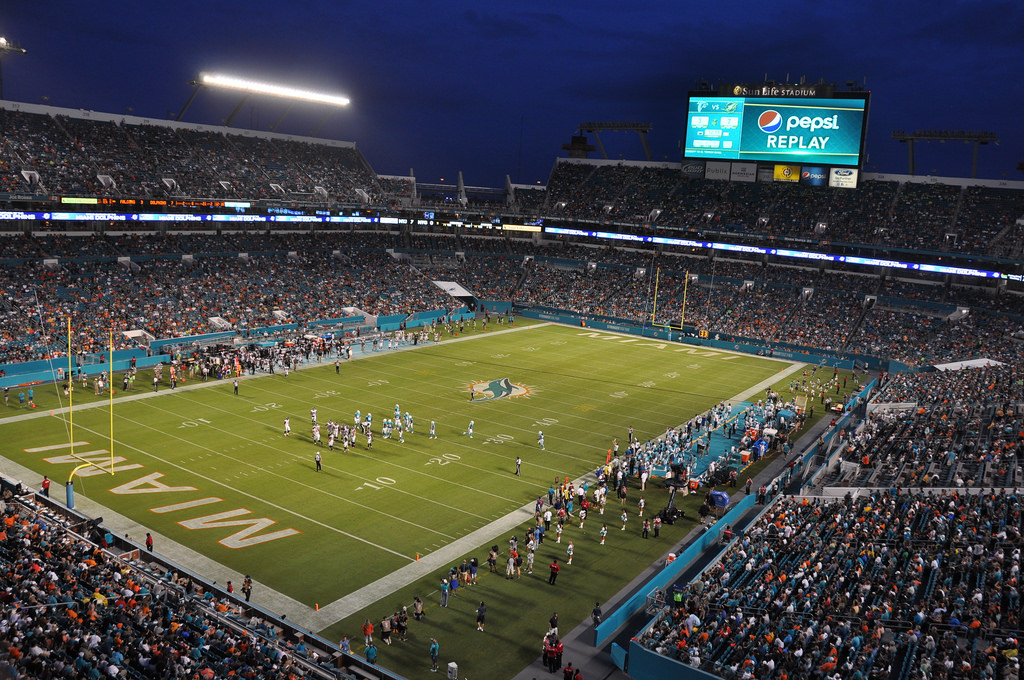
View from the end zone at Hard Rock Stadium
Hard Rock Stadium Pictures