In a region long defined by “Tobacco Road” and elite college basketball, professional football arrived in the Carolinas in 1995 with the birth of the Carolina Panthers. The movement to secure an NFL franchise began in the late 1980s, shortly after Charlotte was awarded an NBA expansion team. In 1987, former NFL player and businessman Jerry Richardson spearheaded the effort to bring professional football to the region, rallying political, civic, and corporate leaders from both North and South Carolina. Before the franchise was awarded, several potential stadium sites were evaluated, including areas near Lowe’s Motor Speedway, Center City Charlotte, and even Carowinds amusement park—where one proposal famously placed the 50-yard line directly on the North Carolina–South Carolina border.
| MEMORABLE MOMENTS IN SEAHAWKS HISTORY |
|
Momentum accelerated in 1991 when the National Football League announced plans to expand by two teams. Charlotte competed against St. Louis, Baltimore, Memphis, and Jacksonville. In October 1993, the NFL awarded one of the franchises to Charlotte. The team was named the Carolina Panthers and began play in 1995. Richardson committed to building a privately financed stadium in Uptown Charlotte, funded primarily through the sale of Personal Seat Licenses (PSLs). Originally named Ericsson Stadium after Ericsson purchased naming rights, the venue was later renamed Bank of America Stadium in 2004 following a 20-year agreement with Bank of America.
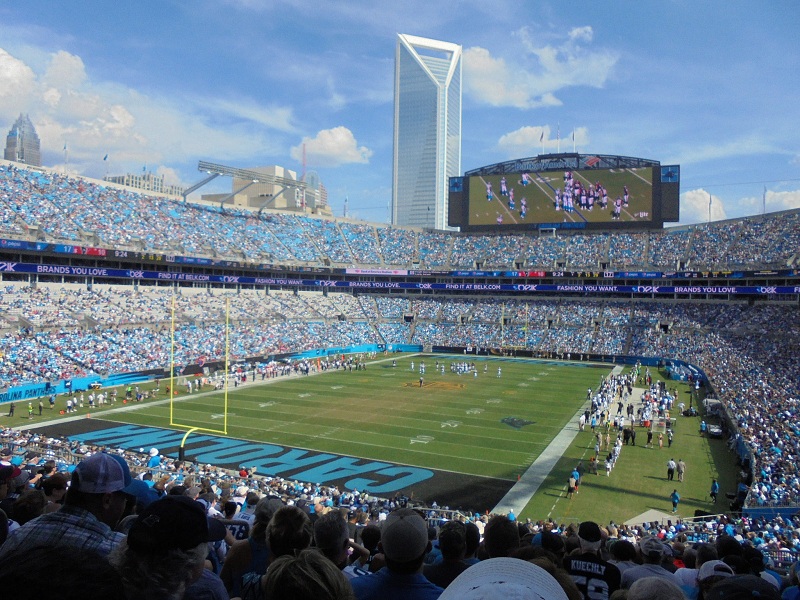
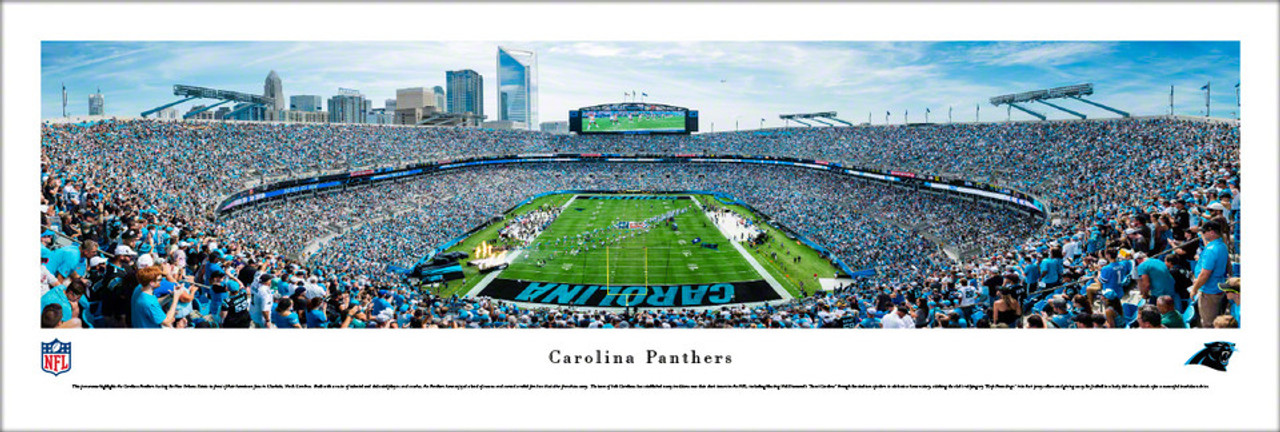
Because the stadium was not completed in time for the 1995 season, the Panthers played their inaugural campaign at Memorial Stadium in Clemson, South Carolina, home of the Clemson Tigers football. Bank of America Stadium officially opened for the 1996 season, with the Panthers playing their first game there on September 14, 1996. Its design ushered in a new era of NFL stadium construction. Located in Uptown Charlotte, the stadium’s striking black obsidian granite façade is framed by massive archways and domed entry towers. Eight-foot-tall panther statues—each weighing approximately 2,000 pounds—stand atop pedestals at the entrances, while illuminated 48-foot light domes crown the towers, creating a dramatic nighttime presence.
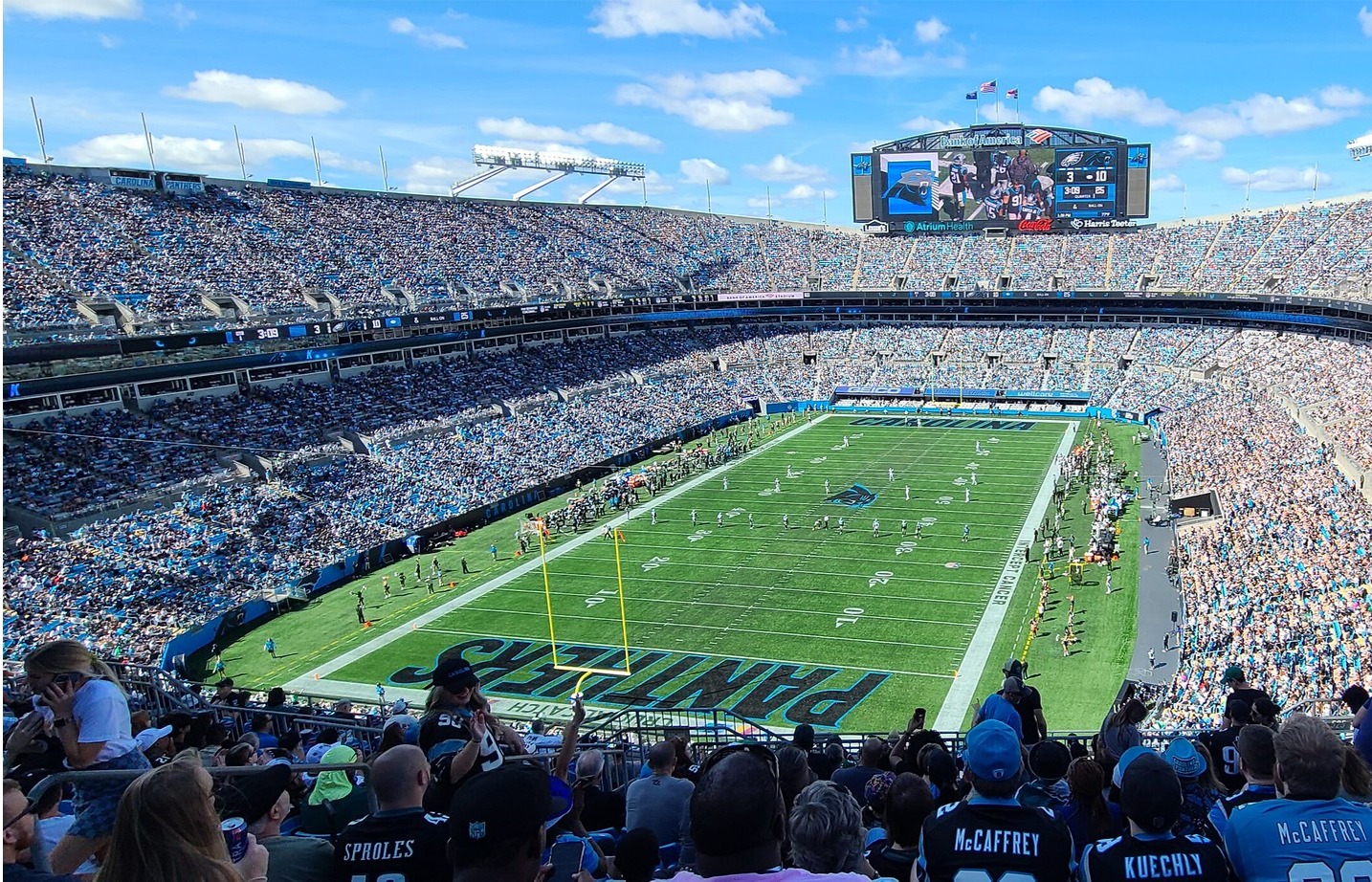
The stadium features more than 74,000 blue and silver seats arranged in three tiers encircling the field, along with 158 luxury suites and premium spaces such as the Gridiron Club. The complex also includes team headquarters, training facilities, and practice fields. For much of its history, the stadium remained structurally consistent, though key upgrades were implemented over time. A new HD videoboard was installed prior to the 2008 season, and in 2014 a $65 million renovation introduced expanded escalator towers, larger 200-foot-wide by 60-foot-high videoboards, and a modernized sound system.
Originally featuring a natural grass playing surface, the field was converted to FieldTurf prior to the 2021 season to accommodate an increasing number of events, including the arrival of Charlotte FC of Major League Soccer.
In 2024, the Panthers unveiled plans for a transformative $800 million renovation, approved by the Charlotte City Council in June of that year. The multi-phase project—scheduled to begin in 2026 and conclude by the 2029 season will deliver comprehensive upgrades, including new videoboards (both interior and exterior), an enhanced façade, expanded social gathering areas, upgraded seating, and modernized concessions, restrooms, and concourses. The investment is designed to ensure Bank of America Stadium remains a premier NFL venue for decades to come.